1. From “I Have to Do Everything” to “My Team Will Grow if I Let Them Help”
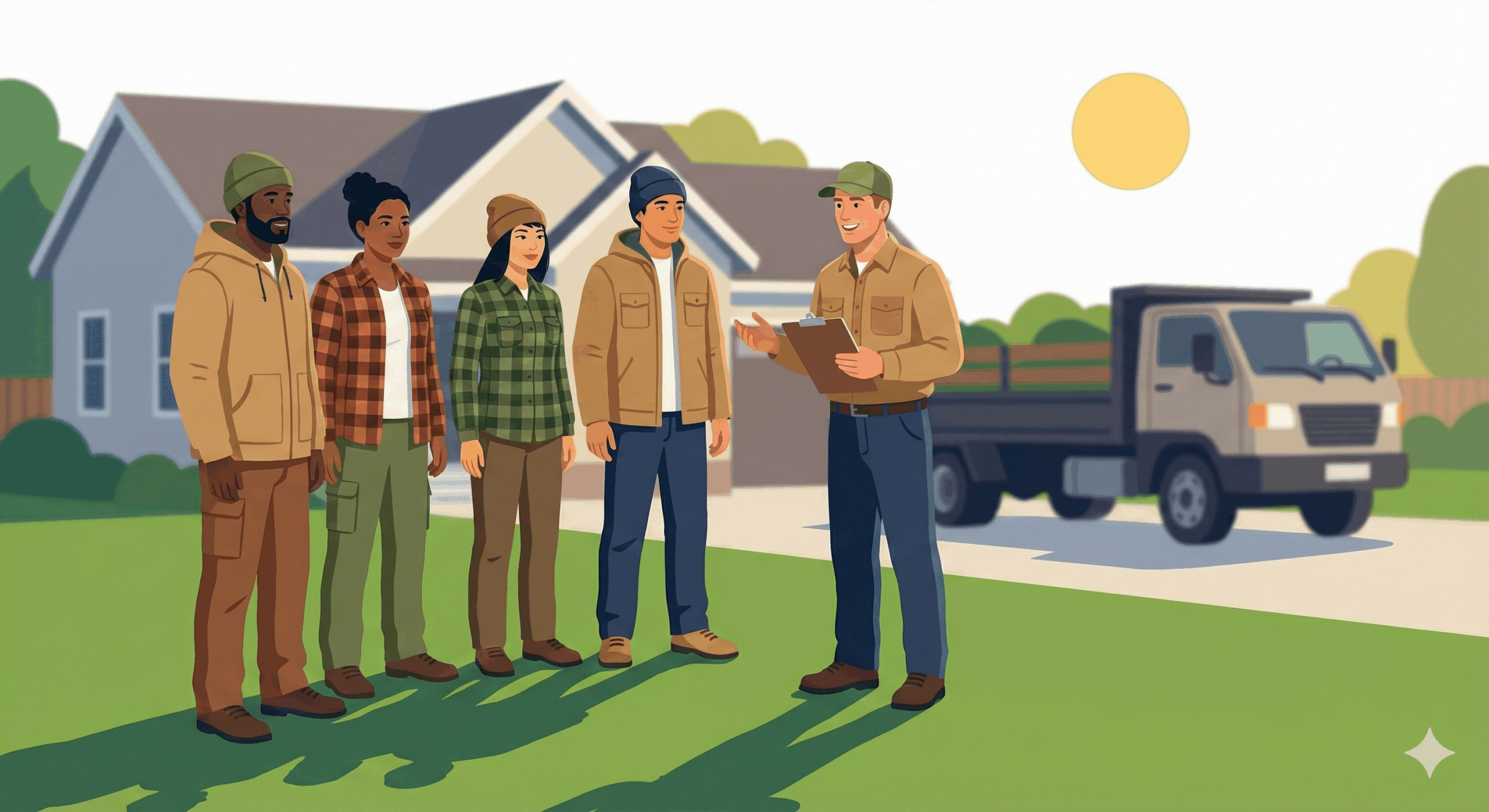
Many landscaping owners built their business with their own hands. They did the estimates, ran the crews, handled the clients and took care of everything in between. That hard work made the business possible, but holding on to every task eventually makes it impossible to grow.
Teams cannot improve if they never get the chance to try. Delegation is not simply handing off work you do not want to do. It is about giving people room to develop. As Layla Hormozi often explains in her leadership teachings, delegation is a skill that gets easier when you understand its different levels.
When you learn to delegate properly, your people gain confidence and your business gains capacity.
The Different Types of Delegation
There is more than one way to delegate. Choosing the right type helps you set your team up for success.
1. Delegation with Support
You give someone a task and guide them through it step by step. This is great for new employees or tasks they have never done before.
Example: You show a crew member how to prepare a job folder while they work alongside you.
2. Delegation with Checkpoints
You hand off the task but set a few small check-ins along the way. This works well for someone who is learning but not fully ready to run on their own.
Example: A team member drafts a follow-up message to a client and checks in with you before sending it.
3. Delegation with Ownership
You give the task fully, along with the decision-making that comes with it. Use this with team members who have earned your trust.
Example: Your crew lead will take full responsibility for conducting all job site walk-throughs next week.
4. Delegation for Development
You delegate something specifically to help someone grow, even if it is faster to do it yourself. This builds future leaders.
Example:
You let a junior employee quote a small maintenance job to build their pricing and client confidence.
Delegation is not losing control. It is building your team’s ability to lead without you needing to be everywhere.
Try This Today:
Pick one task and delegate it. Good options include:
- Ordering materials
- Sending a follow-up email
- Closing out a completed job
- Preparing a job folder
- Confirming tomorrow’s schedule or route
Say:
“I trust you with this. I can help if you get stuck.”
You teach leadership by sharing responsibility. Delegation is the first step to building a team that can grow with your business.
2. From “We Need Fast Results” to “Good Things Take Time”
Landscaping is a seasonal business. Plants grow slowly. Soil improves slowly. Strong root systems take time to develop. Teams work the same way.
Expecting instant change creates pressure. Focusing on steady progress builds confidence and consistency.
Example:
A company wants more Google Reviews. Instead of trying to force 30 reviews in a week, they build a simple habit: ask every client right after a job. One season later, they have doubled their review count.
Try This Today:
Ask your team: “What is one small improvement we can make this week?”
Maybe it is labelling tools, prepping materials the day before or improving communication between crews.
Choose one idea and start it this week.
3. From “Problems Are a Pain” to “Problems Show Us What to Fix.”
Every landscape company deals with problems. Something gets missed on a job. A client becomes confused. Materials arrive late. A crew misinterprets an instruction.
Problems are not a sign of failure. They are signals. They show you where your systems or communication need improvement.
Example:
If the crew keeps forgetting tools, the issue is not the people. It is the system. A simple checklist in the truck solves it.
Try This Today:
When something goes wrong, pause and ask:
“What is this trying to teach us?”
Write down one small fix and try it on the next job.
This turns frustration into progress.
4. From “They Should Know Better” to “Clear Expectations Help Everyone.”
Most mistakes in landscaping happen because someone assumed something. Clear expectations prevent misunderstandings and speed up the workday.
Leadership experts often say that clarity is free and highly effective. When everyone knows exactly what success looks like, they perform better.
Example:
A crew arrives on site but does not know which area to start with. Five minutes of confusion costs half an hour of productivity.
A quick morning briefing solves this instantly.
Try This Today:
Hold a two-minute huddle before crews head out. Cover:
- What success looks like today
- The top three priorities
- Any special instructions
Clear direction prevents chaos.
5. From “I Need Hard Workers” to “People Work Hard When They Feel Valued.”
People do not give their best effort because they are pressured. They do it because they feel respected, supported and seen. Landscaping is physically demanding work. A positive environment improves performance and reduces turnover.
Culture is not created with big speeches. It is created with small daily habits.
Example:
If someone goes the extra mile on a job, acknowledge it right away. When people feel appreciated, they repeat the behaviour.
Try This Today:
Give one team member specific praise. Not general praise like “good job”, but something real:
“I really appreciate how you handled that client question. It helped make the job smoother.”
Recognition builds loyalty faster than anything else.
6. From “My Way Is the Only Way” to “There Might Be a Better Way.”
Experienced leaders have great methods, but sometimes your team sees opportunities you cannot see. They are closer to the work. They know where time is wasted, where tools could be organized better and where communication could improve.
When leaders stay open to new ideas, the team becomes creative and engaged.
Example:
A crew suggests reorganizing the trailer so the most used tools are near the door. This saves five minutes per job. Across a season, that saves days of labour.
Try This Today:
Ask: “If you could improve one part of how we work, what would it be?”
Choose one idea and test it within two days.
Showing you listen motivates people to think more like leaders.
7. From “Let’s Just Get Through the Week” to “We Are Building Something Bigger.”
When a company is only focused on the next day or the next crisis, people feel exhausted. But when you share a clear direction for the future, your team feels purpose. They see themselves as part of something that is growing, not just surviving.
People stay longer when they feel connected to where the company is going.
Example:
Let your team know you plan to add a new crew next year or invest in better equipment. When people see the future, they invest more in the present.
Try This Today:
Share one small piece of your long term plan.
Say something like:
“Next season, I want to expand our design work. There will be new opportunities for people who want to grow with us.”
Purpose builds unity and motivation.
Final Thought: Small Mindset Shifts Create Strong Teams
A strong team is not created by luck. It is built through small, consistent shifts in how the leader thinks, communicates and supports their people. When the mindset improves, the business becomes easier to run, the team becomes more dependable and the clients feel the difference.
Start with one mindset shift today. The impact will grow over time, just like a healthy landscape.